A friend of mine spent $18,000 and eight months working with a development agency to build a simple customer portal for her consulting business. By the time it launched, her client base had changed, the feature requirements had shifted, and she needed changes — which cost more money and another two months.
Sound familiar? For most entrepreneurs and small business owners, the traditional path to building software has been exactly this: expensive, slow, and frustrating. You have the idea. You know what you want it to do. But you’re entirely dependent on someone else to make it real.
That’s changing fast. Drag-and-drop AI app development has matured to the point where non-technical founders are building tools that would have required a team of developers just three years ago — and doing it in days, not months. If you’ve been wondering whether a no-code AI app builder is right for you, the short answer is: it’s already better than you think.

The Developer Bottleneck Most Entrepreneurs Never Escape
Here’s the uncomfortable reality: the average cost to hire a developer to build a custom web application ranges from $50,000 to $250,000 depending on complexity, according to software development surveys. For an early-stage founder, that number is either impossible or terrifying.
And even if you can afford it, you’re still at someone else’s mercy. Timelines slip. Revisions pile up. The thing you described in a brief doesn’t quite match what gets built. You end up playing interpreter between your business vision and someone else’s technical execution.
The result? Thousands of genuinely good ideas never get built. Not because they weren’t viable — because the barrier to entry was too high.
“The biggest bottleneck in modern entrepreneurship isn’t capital or ideas — it’s the gap between having a vision and having the technical means to execute it. No-code tools are closing that gap faster than anyone predicted.”
— Dr. Mara Collins, Digital Entrepreneurship Researcher, Stanford d.school
What Drag-and-Drop AI App Development Actually Means in 2026
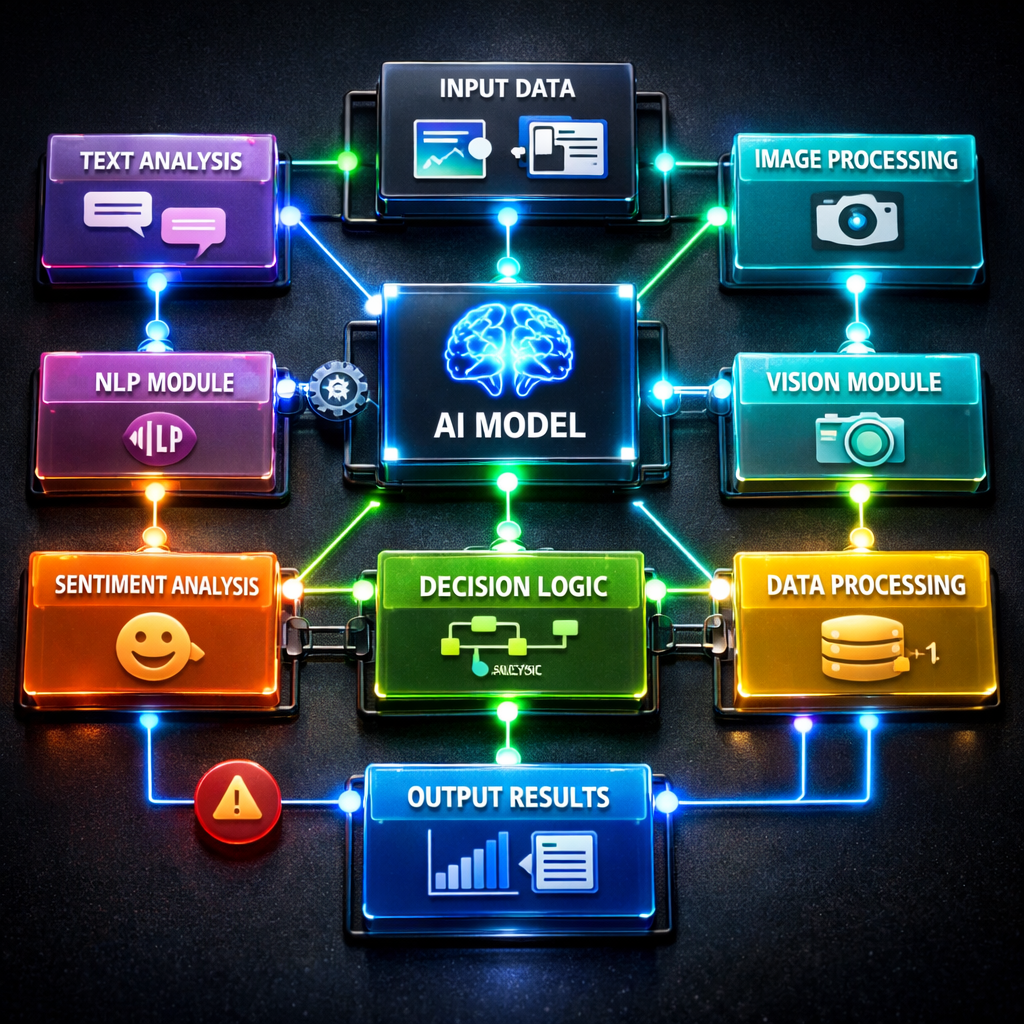
The term gets thrown around a lot, so let’s be specific. Drag-and-drop AI app development refers to visual builder platforms where you construct applications by placing and connecting pre-built components — forms, databases, AI modules, automations, UI elements — without writing code.
The “AI” part is what’s changed everything in the last two years. Earlier no-code tools let you build static or data-driven apps. Modern platforms now include AI components you can snap in like building blocks: a natural language chatbot, an image recognition module, a content generation engine, a decision-making workflow powered by large language models.
Think of it like assembling a piece of furniture from IKEA — except the furniture pieces are intelligent, connected software components. You decide what goes where, how things connect, and what the end result should do. The platform handles the plumbing.
Platforms like Bubble, FlutterFlow, WeWeb, and Adalo serve different parts of this space. Some focus on web apps, others on mobile. Some are better for database-heavy tools, others for customer-facing interfaces. And increasingly, newer platforms are going further — letting you build not just apps, but entire AI-powered workflows and autonomous digital workers that run tasks on your behalf.
The Numbers Behind the No-Code Revolution
This isn’t a niche trend anymore. The data is striking.
The global no-code AI platform market was valued at $4.28 billion in 2024. By 2033, it’s projected to reach $44.15 billion — a compound annual growth rate of 30.2%, according to Grand View Research. Straits Research puts the 2025 market at $4.77 billion, on its way to $37.96 billion by 2033.
Gartner forecasts the broader low-code development market to exceed $30 billion in 2026 alone. And with companies like Airtable valued at $11 billion and Zapier at $5 billion, the investment world has already placed its bets on where software development is heading.
But the more interesting statistic might be this one: Gartner also predicts that by 2025, over 70% of new applications will be built using low-code or no-code tools. That’s not a future projection anymore — that future is now.
The message is clear. The shift from professional developers to empowered non-technical builders isn’t a fringe movement. It’s becoming the default way software gets made.
What You Can Actually Build — and How Fast
Let’s get concrete. Here’s what real people are building with drag-and-drop AI app development today, and the rough timelines:
- Customer portals — A client-facing dashboard where customers can log in, view their project status, submit requests, and receive automated updates. Build time: 1–3 days.
- AI chatbots for customer support — A trained chatbot that answers questions based on your knowledge base, routes complex issues, and logs conversations. Build time: a few hours to one day.
- Internal workflow automation tools — Tools that pull data from multiple sources, run AI analysis, and push results to your team via email or Slack. Build time: 1–2 days.
- Lead qualification systems — Forms that collect info, run it through AI scoring logic, and automatically segment and notify your sales team. Build time: half a day.
- Content generation dashboards — Internal tools where your team enters a topic and gets AI-drafted content they can edit and publish. Build time: a few hours.
What used to take a team of three developers six weeks now takes one non-technical person a few days. That’s not an exaggeration — it’s the experience of thousands of founders and marketers who’ve made the switch.
“I used to spend four hours every Friday manually pulling data and writing reports. Now the tool does it overnight and emails clients automatically. I got those four hours back every single week.”
— Sarah Nguyen, Freelance Marketing Consultant
The Honest Truth: Where It Still Has Limits
No technology is a magic wand, and drag-and-drop AI app development is no exception. There are real limitations worth knowing before you go all-in.
Highly complex logic can hit walls. If your application requires intricate branching logic, custom algorithms, or deep integration with legacy enterprise systems, no-code tools may struggle — or require workarounds that become fragile over time.
Performance at scale is sometimes a concern. Most no-code platforms are optimized for small-to-medium usage. If you’re building something that needs to handle millions of simultaneous users with sub-100ms response times, you’ll likely need custom infrastructure eventually.
Vendor lock-in is real. Your app lives on someone else’s platform. If pricing changes, the company gets acquired, or the platform sunsets a feature, you have limited options. Exporting your app to a self-hosted environment is often difficult or impossible.
None of these are reasons to avoid no-code tools. They’re reasons to be thoughtful about your use case. For most small businesses and early-stage products, these limitations simply don’t apply.
How to Pick the Right Platform for Your Idea
With dozens of platforms competing for your attention, choosing can feel overwhelming. Here’s a simple framework.
Start with your use case. Are you building a mobile app, a web app, or an internal tool? Some platforms specialize. FlutterFlow is strong for cross-platform mobile apps. Bubble excels at complex web applications with databases. WeWeb is great for polished, production-quality front-ends connected to external backends.
Consider your comfort with complexity. Some platforms have steeper learning curves but offer more power. Others are genuinely beginner-friendly and can get you to a working prototype in a day. If you want to start quickly and iterate fast, prioritize simplicity over feature count.
Think about the AI layer. Not all no-code platforms have meaningful AI capabilities built in. If your core use case involves AI — generating content, analyzing data, running intelligent automations — make sure the platform you choose has robust AI integration, not just a basic chatbot widget bolted on.
Check the pricing model carefully. Some platforms charge per user, others per operation, others per month at a flat rate. Model out your expected usage before committing to a paid plan.
Platforms like Zygote.AI are pushing this space forward by combining the visual no-code builder experience with genuinely powerful AI capabilities — letting you create not just apps, but configurable AI digital workers that handle entire workflows autonomously. That convergence of no-code ease and AI depth is where the most exciting possibilities currently live.
You Don’t Have to Wait Until You Know How to Code
There’s a mental block that holds a lot of people back. It goes something like: “I’ll learn to code first, then build my idea.” Or: “I’ll hire a developer once I raise money.” Or: “My idea is too complicated for a no-code tool.”
In almost every case, those beliefs are outdated. The tools have evolved past them.
The most empowering shift that drag-and-drop AI app development makes possible isn’t just technical — it’s psychological. When you can iterate on your own idea in real time, test with real users in days instead of months, and adjust based on what you learn without filing a ticket and waiting two weeks, everything about how you build changes.
You become the builder. The experimenter. The person who ships.
Great ideas shouldn’t sit in notebooks waiting for permission from a developer’s schedule. The tools exist today to take your concept from idea to working application faster than ever before — and the gap between “I had this idea” and “I shipped this product” has never been smaller. The AI SaaS creation platform revolution is already underway, and it’s waiting for you to join it.
The only question left is what you’re going to build first.